The following includes select facts from life science history, both global
and Alberta specific, that help explain the origins of the province's life science
industry. We encourage you to learn about the people behind the discoveries, the entrepreneurs,
philanthropists, political leaders, and significant events, institutions and companies that are the
foundation of the life science industry in Alberta. If you are aware
of a notable event, person, organization/company or accomplishment that should be included,
please e-mail: Suggestions@InfoResource.org
We also invite you to explore Alberta Life Science Genealogy, a one-of-a-kind image
that illustrates the founding technology origins more than 60 life science firms located in
the province. Specifically, the origins of the companies' founding technology with the province's
universities and non-profit research organizations -- longstanding centers of innovation, technology
transfer and job creation.
Note: This poster not only illustrates the technology foundation of the province's existing life
science companies, but includes in a companion poster, the companies that have come and gone since the 1980's
-- providing a very unique historical perspective. To access the posters (PDF format), please click on the
image above.
The newly updated Alberta Life Science Genealogy and other state and province posters will be
made available in high-resolution digital and printed formats for distribution throughout the U.S. and Canada in 2019.
Information about sponsorship opportunities will soon be available.
1859 -- Charles Darwin published "The Origin of Species."
In 1859, British naturalist Charles Darwin published "On the Origin of Species by Means of
Natural Selection, or the Preservation of Favoured Races in the Struggle for Life"
in which he postulated his theory of evolution that explained how the diverse of
species on Earth evolved from a simple, singled-celled ancestor.
Darwin's theory of evolutionary selection holds that variation within species occurs randomly
and that the survival or extinction of each organism is determined by that organism's ability
to adapt to its environment. Darwin's theory of evolution remains the foundation of modern
biology.
1865 -- Gregor Mendel, the father of modern genetics, presented his laws of heredity.
Gregor Mendel, an Augustinian considered the father of modern genetics,
conducted crossbreeding experiments with pea plants between 1856 and 1863. Through this work,
he established many of the rules of heredity.
"In 1859 I obtained a very fertile descendant with large, tasty seeds from a first generation
hybrid. Since in the following year, its progeny retained the desirable characteristics
and were uniform, the variety was cultivated in our vegetable garden, and many plants were
raised every year up to 1865. (Gregor Mendel to Carl Nägeli, April 1867).
1887 -- Marine Hospital Service Hygienic Laboratory (National Institutes of Health) was founded.
The National Institutes of Health (NIH) traces its roots to 1887,
when a one-room laboratory was created within the Marine Hospital Service (MHS), predecessor agency to the
U.S. Public Health Service (PHS). The MHS was established in 1798 to provide for the medical care of
merchant seamen -- charged by Congress with examining passengers on arriving ships for clinical signs of
infectious diseases, such as cholera and yellow fever, to prevent epidemics.
During the 1870s and 1880s, scientists in Europe presented compelling evidence that microscopic organisms
were the causes of several infectious diseases, and MHS officials closely followed these developments.
In 1887, Joseph Kinyoun, a MHS physician trained in the new bacteriological
methods, set up a one-room laboratory in the Marine Hospital at Stapleton, Staten Island,
New York. Kinyoun called this facility a "laboratory of hygiene" in imitation of German facilities, and within
a few months, he identified the cholera bacillus and used his Zeiss microscope to
demonstrate it to his colleagues as confirmation of their clinical diagnoses
(Photo: courtesy of the NIH Almanac).
1899 -- Charles E. Frosst & Co was founded.
Charles E. Frosst & Co, was founded in 1899 by Mr. Frosst and four associates in 1899, who rapidly introduced new
products such as the famous numbered analgesics known as 217® and 222® — products that are still used in Canada.
During the 1920s, the company became family-owned and developed a reputation for innovation.
During the mid-forties, Charles Frosst pioneered nuclear medicine in Canada by developing the country's first
radioactive pharmaceutical products, for sale in Canada and abroad.
In 1965, Merck & Co., Inc. of New Jersey acquired Charles E. Frosst & Co. In 1968,
Merck Frosst Laboratories
was created to act as the service company to the two sales companies: Merck Sharp & Dohme Canada Limited; and
Charles E. Frosst & Co. In 1982, the three companies were restructured under the name Merck Frosst Canada Inc.
and it became a fully integrated pharmaceutical company. The company later changed its name to Merck Frosst Canada Ltd.
Today, Merck Frosst is one of Canada 's leading research-based pharmaceutical companies
and possesses a long record of innovation. The Merck Frosst Centre for Therapeutic Research, one of the largest biomedical research
facilities in Canada, has the mandate to discover new therapies for the treatment of respiratory diseases, inflammatory
diseases, diabetes and osteoporosis.
1905 -- The University of Alberta was founded.
The University of Alberta in Edmonton was
founded in 1905 by legislation passed shortly after Alberta became a province. Today the
university hosts 36,000 students and offers more than 200 undergraduate and 170 graduate programs.
With an external research funding of over $400 million, the university plays a big role in
biotechnology research in the province. Research institutes indlude the
Alberta Proteomics and Mass Spectrometry Facility, the Alberta Glycomics Centre,
and the Alberta Centre on Aging.
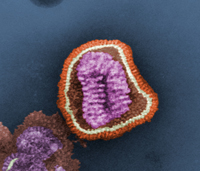
1918 -- Spanish Influenza Pandemic.
It is estimated that between 25 and 40 million people died
from the the influenza outbreak that began in 1918, swept across
around the world in three months. In Canada more than 50,000 people
died and all parts of the country were affected.
1919 -- Stanley Cup playoffs between the Montreal Canadians and Seattle Metropolitans cancelled by Spanish flu.
On April 1, 1919, the Stanley Cup playoffs between the Montreal Canadians and the
Seattle Metropolitans ended tied at 2-2-1 after the city of Seattle health department called
off the series. Several of the Canadians and Seattle players caught the flu, and recovered.
On April 5, 1919, five days after the final was cancelled, one Canadian player Joseph
Henry “Bad Joe” Hall, the oldest player in NHL hockey, succumbed to pneumonia. He was
posthumously inducted into the Hockey Hall of Fame in 1961. He was 37 years old.
George Kennedy, manager of the Canadiens, tried to forfeit the Cup, but Pete Muldoon,
manager and coach of Seattle, declined. The series was ruled a tie and the Stanley Cup
was not awarded in 1919, for the only time since it's inception in 1893.
The Metropolitans won the Stanley Cup in 1917 when they defeated the Montreal Canadiens.
1921 -- Alberta Research Council was founded.
The Alberta Research Council (ARC), was founded in 1921 by a
provincial government Order-in-Council as the Scientific and Industrial Research Council of Alberta (SIRCA) with a
mandate to document Alberta's mineral and natural resources for industrial development. Originally, SIRCA was housed
on the University of Alberta campus in the capital city of Edmonton. ARC was the first provincial research organization in
Canada.
In 2010, the ARC name was changed to Alberta Innovates - Technology Futures (AITF).
Today, the AITF supports innovation, research and commercialization taking place across
Alberta, focusing on the growth and development of technology-based sectors, the
commercialization of technology, and the provision of business and technical service.
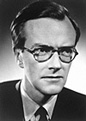
1933 -- Thomas Hunt Morgan was awarded Nobel Prize in Physiology or Medicine for his
chromosome theory of heredity.
Thomas Hunt Morgan pioneered the new science of genetics through experimental
research with the fruit fly (Drosophila), laying the foundations for the future of biology. On
the basis of fly-breeding experiments he demonstrated that genes are linked in a series on
chromosomes and that they determine indentifiable, hereditary traits.
1947 -- Transistor was invented at AT&T's Bell Laboratories.
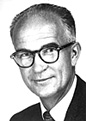
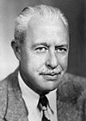
The transistor, the invention that marked the dawn of the
information age, was invented by John Bardeen, William Shockley and Walter Brattain at AT&T's Bell Laboratories. Bardeen,
Shockley and Brattain were awarded the 1956
Nobel Prize in Physics for their discovery of the transistor effect.
1953 -- Double helix structure of DNA was revealed.
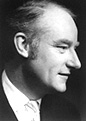
The double helix structure of DNA, the hereditary molecule is revealed by
two scientists, James D. Watson and Francis Crick. This is one of the key
discoveries of the century. Watson and Crick shared the 1962
Nobel Prize for Physiology and Medicine with Maurice Wilkins for their discoveries
concerning the molecular structure of nuclear acids and its significance for information
transfer in living material.
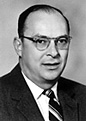
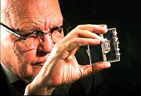
Jack Kilby, an engineer at
Texas Instruments shows only a transistor and other components on a slice of
germanium. This invention (7/16-by-1/16-inches in size), called an integrated
circuit, revolutionized the electronics industry. Kilby was awarded
the 2000 Nobel Prize in
Physics for his invention of the integrated circuit.
(Photo: Jack Kilby courtesy of Texas Instruments)
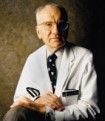
Jack Kilby went on to pioneer military, industrial, and commercial applications of
microchip technology. He headed teams that built both the first military system and the
first computer incorporating integrated circuits. He later co-invented both the hand-held
calculator and the thermal printer that was used in portable data terminals.
Mr. Kilby officially retired from TI in 1983, but he maintained a significant involvement
with the company throughout his life.
1961 -- President John F. Kennedy expanded the U.S. Space Program
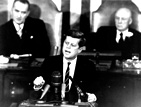
Listen to President John F. Kennedy's speech in
his historic message to a joint session of the Congress, on May 25, 1961 declared,
"...I believe this nation should commit itself to achieving the goal, before this decade
is out, of landing a man on the Moon and returning him safely to the Earth." This goal was
achieved when astronaut Neil A. Armstrong became the first human to set foot upon the
Moon at 10:56 p.m. EDT, July 20, 1969. Shown in the background are, (left) Vice
President Lyndon Johnson, and (right) Speaker of the House Sam T. Rayburn. The expansion of
the U.S. Space Program resulted in the development of a wide range of technology with
enormous benefit to human and animal kind.
(Photo: courtesy National Aeronautics & Space Administration)
1966 -- The University of Calgary founded.
The University of Calgary, founded in 1966,
hosts over 28,000 students with over 80 academic programs and 36 research centers and institutions.
The U of C is one of Canada's top research universities and has a sponsored
research revenue of over $250 million.
In 1998, University of Calgary's Dr. Patrick Lee developed a reovirus that can infect and kill
cancer cells without harming healthy cells.
1969 -- Man walked on the moon.
In July of 1969, Neil Armstrong and Buzz Aldrin, American astronauts, made
history by becoming the first men to walk on the moon.
Listen to Neil Armstrong's first words as he steps onto the lunar
surface (66 kb .wav file). Photo: Courtesy of the National Aeronautics & Space Administration)
An important benefit of the Apollo Lunar Program and
other NASA programs is the ever-growing pipeline of technology that improves human and
veterinary healthcare diagnostics and therapeutics.
1969 -- Victor McKusick published "Mendelian Inheritance in Man".
Victor McKusick, widely acknowledged as the father of medical genetics, spent his career studying
the genetic basis of diseases and disorders with the belief that such an understanding could lead
to new methods of diagnosis and treatment. He studied, identified, and mapped genes responsible for
inherited conditions such as Marfan syndrome and dwarfism (specifically in Amish communities).
In 1969, he proposed the idea of mapping the human genome, over 30 years before the Human
Genome Project was established.
McKusick, a graduate of Johns Hopkins (M.D. 1946), spent his entire career there and founded
the Division of Medical Genetics in 1957, the first research center and clinic of its kind. In
1969 he published the 1st edition of his
book "Mendelian Inheritance of Man",
one of the most comprehensive collections of inherited disease genes. In 2002, McKusick received the
highest scientific honor in the U.S., the National Medal of Science.
1971 -- NASDAQ Stock Market was founded.
NASDAQ Stock Market was founded as the world's first electronic stock market by the
National Association of Securities Dealers. The NASDAQ system, created by the Bunker Ramos
Corp. allowed the financial community, for the first time, to determine which market
offered the best price on a given security.
1973 -- Recombinant DNA was perfected.
The modern era of biotechnology begins when Stanley Cohen of Stanford University and Herbert Boyer of the University of
California at San Francisco successfully recombined ends of bacterial DNA after splicing a toad gene in between. They
called their accomplishment recombinant DNA, but the media preferred the term genetic engineering.
(Photo: Courtesy Stanley Cohen)
Boyer and Cohen's achievement was an advancement upon the techniques developed by Paul Berg, in 1972,
for inserting viral DNA into bacterial DNA. Cohen's research at Stanford was with plasmids—the nonchromosomal, circular
units of DNA found in, and exchanged by, bacteria, while Boyer's was restriction enzymes produced by bacteria to counter
invasion by bacteriophages.
1975 -- Monoclonal antibodies were produced.
In 1975, Georges Köhler and César Milstein, showed how monoclonal antibodies can be generated by
isolating individual fused myeloma cells.
Genentech was founded by venture
capitalist Robert Swanson and biochemist Dr. Herbert Boyer. In the early 1970s, Boyer
and geneticist Stanley Cohen at Stanford University pioneered recombinant DNA technology.
Within a few short years Swanson and Boyer invented a new industry - biotechnology.
In 1980, Genentech issued its Initial Public Offering (IPO) and raised $35 million
with an offering that jumped from $35 a share to a high of $88 after less than an
hour on the market. This event was one of the largest stock run-ups ever, and that
event set the stage for future biotechnolgy industry offerings.
1977 -- First human gene was cloned.
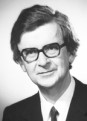
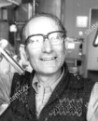
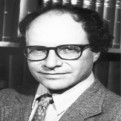
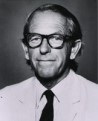
Walter Gilbert induced bacteria to synthesize insulin and interferon, and Frederick Sanger
published the complete sequence of phage FX174. The 1980 Nobel Laureate in Chemistry was
awarded jointly to Frederick Sanger and Walter Gilbert for "for their contributions concerning
the determination of base sequences in nucleic acids, and to Paul Berg for his fundamental
studies of the biochemistry of nucleic acids, with particular regard to recombinant-DNA.
1980 -- U.S. Supreme Court ruled man-made organism patentable.
Diamond v. Chakrabarty, the U.S. Supreme Court upholds five-to-four the patentability of
genetically altered organisms, opening the door to greater patent protection for any
modified life forms.
In 1972, Mohan Chakrabarty, a microbiologist, filed a patent
application, assigned to the General Electric Co. for a human-made genetically engineered
bacterium capable of breaking down multiple components of crude oil. Because of this
property, which is possessed by no naturally occurring bacteria, Chakrabarty's invention
was believed to have significant value for the treatment of oil spills. The application
asserted 36 claims related to Chakrabarty's invention of "a bacterium from the genus
Pseudomonas containing therein at least two stable energy-generating plasmids, each of
said plasmids providing a separate hydrocarbon degradative pathway.
Opinions: Chief Justice Warren Burger delivered the opinion
of the Court, in which justices Potter Stewart, Harry Blackmun, William Rehnquist, and
John Paul Stevens joined. William Brennan filed a dissenting opinion, in which Byron
White, Thurgood Marshall, and Lewis Powell joined.
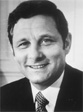
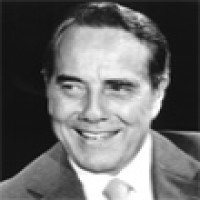
1980 -- Bayh-Dole Act provided for university technology transfer.
H.R.6933, Public Law: 96-517, December 12, 1980. A bill to amend title
35 of the United States Code. This Act known as the Bayh-Dole Act provided for the legal transfer of research and
technology originating from U.S. universities and federal laboratories to private
companies for commercialization. Technology transfer offices are now common in
universities and federal laboratories and are the technology foundation for numerous
biotechnology and medical device companies. (Photos: Birch Bayh and
Robert Dole courtesy U.S. Senate Historical Office)
1980 -- Alberta Heritage Foundation for Medical Research founded.
The Alberta Heritage Foundation for Medical Research (AHFMR), was
founded in 1980 by the Provinicial Legislature with an endowment of $300 million to support biomedical and health
research at Alberta universities, affiliated institutions, and other medical and technology-related institutions.
Today, the AHFMR endowment has grown to approximatley $1.2 billion (2006) and supports 230 senior researchers
recruited from Alberta and around the world, and another 300 researchers-in-training. AHFMR investigators have
earned international acclaim for their pioneering work in areas such as: heart attack therapy, islet transplantation
for diabetics, nerve regeneration, the cell biology of cancer, drugs for viral infections, electrical therapy for
paralysed people, and vaccines, and better understanding and treatment of arthritis
1984 -- Alec Jeffreys and technician Vicky Wilson discovered minisatellites leading to the development of genetic fingerprinting.
In 1984, geneticist Sir Alec Jeffreys, and technician Vicky Wilson at the University of
Leicester in England discovered minisatellites leading to the development of genetic fingerprinting.
The new technology was first used in 1985 to resolve a disputed immigration case
that confirmed the identity of a British boy whose family was from Ghana.
In 1988, Colin Pitchfork was convicted of murdering two girls in 1983 and 1986 in
Narborough, Leicestershire, England after his DNA samples matched semen samples
taken from the two dead girls. Jeffreys' work in this case convicted the
killer, but also exonerated Richard Buckland, a suspect who otherwise might
have spent his life in prison. In 1994, Jeffreys' was knighted by Queen
Elizabeth II for his services to genetics.
1990 -- Human Genome Project was established.
The U.S. Human Genome
Project was established -- a 13-year effort coordinated by the U.S.
Department of Energy and the National Institutes of Health. The main goals of the
Human Genome Project were to provide a complete and accurate sequence of the 3 billion
DNA base pairs that make up the human genome and to find all of the estimated 20,000 to
25,000 human genes. The project, originally planned to last 15 years, was expected
to be completed by 2003 due to rapid technological advances.
1993 -- Kary B. Mullis was awarded Nobel Prize in Chemistry.
PCR allows scientists to quickly replicate small strands of DNA, greatly simplifying
the sequencing and cloning of genes. First presented in 1985, PCR has become one of
the most widespread methods of analyzing DNA. Notably, PCR requires the heat-stable enzyme
Taq (Thermus Aquaticus) which originated from hot springs located in Yellowstone
National Park.
1993 -- The CRISPR-Cas microbial adaptive immune system and its function was discovered.
In 1993, Francisco Mojica at the University of Alicante in Spain was the first researcher
to characterize what is now called a CRISPR locus (Clustered regularly-interspaced short
palindromic repeats). In 2000, Mojica recognized that what had been reported as
disparate repeat sequences actually shared a common set of features, now known to be
hallmarks of CRISPR sequences (the term CRISPR was coined through correspondence with
Ruud Jansen, who first used the term in print in 2002).
In 2005 Mojica reported that these sequences matched snippets from the genomes of
bacteriophage. This finding led him to hypothesize, correctly, that CRISPR
is an adaptive immune system. Another group, working independently, published similar
findings.
1993 -- Biotechnology Industry Organization (BIO) was founded.
Biotechnology Industry
Organization BIO is the world's largest trade association representing biotechnology
companies, academic institutions, state biotechnology centers and related organizations
across the United States and in more than 30 other nations. BIO members are involved
in the research and development of innovative healthcare, agricultural, industrial
and environmental biotechnology products.
2001 -- Human Genome Project draft sequence was published.
The February 16 issue of Science and February
15 issue of Nature contained the working draft of the human genome
sequence (U.S. Human Genome
Project). Nature papers included initial analysis of the descriptions of the sequence
generated by the publicly sponsored Human Genome Project, while Science publications focused
on the draft sequence reported by the private company, Celera Genomics.
2001 -- National Institute for Nanotechnology founded.
National Institute for Nanotechnology (NINT), founded in 2001,
is an integrated, multi-disciplinary institution involving researchers in physics, chemistry, engineering, biology,
informatics, pharmacy and medicine. NINT is operated as a partnership between the National Research Council and the
University of Alberta, and is jointly funded by the Government of Canada, the Government of Alberta and the university.
The main focus of NINT researchers is the integration of nano-scale devices and materials into
complex nanosystems that are connected to the outside world. The long-term objective is to discover 'design rules' for
nanotechnology, and develop platforms for building nanosystems and materials that can be constructed and programmed
for a particular application.
2005 -- Genome Alberta was founded.
Genome Alberta, founded in 2005,
is one of six Genome Canada centres across the country. Genome Canada is the primary funding and information resource
related to genomics and proteomics in Canada.
In partnership with Genome Canada, Industry Canada and the Province of Alberta, Genome Alberta was established in
to focus on genomics as one of the central components of the Life Sciences Initiative in Alberta, and to help position
the Initiative as a core research effort similar to that developed for the provincial energy and information
technology sectors.
2005 -- The National Institute for Nanotechnology (NINT) opened its doors.
On Oct. 12, 2005, the Government of Canada committed $3.8 million to the
University of Alberta for the National Institute for Nanotechnology (NINT)’s Innovation
Centre. The Centre officially opened in 2007 with the objective to help Canadian companies
exploit the potential of nanotechnology and to foster the growth of an Edmonton-area
cluster of companies that utilize nanotechnology.
2007 -- The National Institutes of Health established the Human Microbiome Project.
On Dec. 19, 2007, the Human Microbiome Project (HMP), a $150 million initiative, was established by the National
Institutes of Health with the mission of generating resources that would enable the comprehensive characterization of
the human microbiome and analysis of its role in human health and disease.
The HMP is the collection of all
the microorganisms living in association with the human body, including eukaryotes, archaea, bacteria and viruses.
Bacteria in an average human body number ten times more than human cells, for a total of about 1000 more genes
than are present in the human genome.
2008 -- Alberta BioEvolution illustrates the technology origins of state's industry.
Alberta BioEvolution -- a one-of-a-kind
genealogy chart that illustrates the "technology origins" of more than 40 firms and
non-profit research organizations that comprise the biotechnology and medical device
industry in the province of Alberta.
Learn about the history of the life science industry in other states and provinces:
If you are aware of a notable event or person at your company or organization
that should be included in Alberta Life Science History, please e-mail us
at: suggestions@inforesource.org.

 The
The 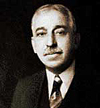
 It is estimated that between 25 and 40 million people died
from the the influenza outbreak that began in 1918, swept across
around the world in three months. In Canada more than 50,000 people
died and all parts of the country were affected.
It is estimated that between 25 and 40 million people died
from the the influenza outbreak that began in 1918, swept across
around the world in three months. In Canada more than 50,000 people
died and all parts of the country were affected.
 On April 1, 1919, the Stanley Cup playoffs between the Montreal Canadians and the
Seattle Metropolitans ended tied at 2-2-1 after the city of Seattle health department called
off the series. Several of the Canadians and Seattle players caught the flu, and recovered.
On April 5, 1919, five days after the final was cancelled, one Canadian player Joseph
Henry “Bad Joe” Hall, the oldest player in NHL hockey, succumbed to pneumonia. He was
posthumously inducted into the Hockey Hall of Fame in 1961. He was 37 years old.
On April 1, 1919, the Stanley Cup playoffs between the Montreal Canadians and the
Seattle Metropolitans ended tied at 2-2-1 after the city of Seattle health department called
off the series. Several of the Canadians and Seattle players caught the flu, and recovered.
On April 5, 1919, five days after the final was cancelled, one Canadian player Joseph
Henry “Bad Joe” Hall, the oldest player in NHL hockey, succumbed to pneumonia. He was
posthumously inducted into the Hockey Hall of Fame in 1961. He was 37 years old.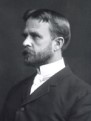
 Listen to






 The
The